
The Uninvited Third Chair: How AI Is Gaming Both Sides of Hiring

Frameworks for Change: A Complete 3-Part Video Series on Change Management
June 19, 2026
Contract vs. Direct Placement: How to Choose the Right Path
August 26, 2026
How Candidates Use AI in the Interview
At the far end of the spectrum are candidates who are not candidates at all. Gartner projects that by 2028, one in four candidate profiles worldwide could be fake. The FBI has also connected more than 300 U.S. companies to North Korean operatives who used stolen identities and AI-built personas to get hired.

Most job seekers are nothing like that, thankfully. Far more common is a real, qualified person quietly using AI to survive a rough market. And the tools have gotten unnervingly good:
- Live deepfakes. A face can be swapped or a voice cloned during a video call. The technology is convincing enough that asking someone to wave a hand in front of their face has become a real screening tactic.
- Interview copilots. These tools listen to the question and place a polished response on the candidate’s screen, often close enough to the camera that the person barely has to look away.
- Real-time translation and answer generation. A candidate can respond in a language they do not speak fluently or talk through a technical topic they have not actually mastered.
Gartner found that 6% of candidates admit to some form of interview fraud, like having someone else sit in for them. Employers are reacting. Amazon is among the companies that have banned AI assistance during live interviews.
Most hiring teams draw the line at real-time assistance. Using AI before the interview can help someone explain what they know. Letting it answer during the interview can hide what they do not.
How Employers Use AI in Hiring
Candidates are not the only ones changing the rules. Employers have introduced their own reasons for job seekers to distrust the process.
Ask a burned-out job seeker why they feel fine gaming the system, and you will hear two words on repeat: ghost jobs. Listings for roles that are already filled, frozen, or were never real to begin with.
So why post a job no one intends to fill? Usually it is nothing dramatic: companies are collecting resumes for later, trying to look like they are growing, or just slow to take a filled role down. The numbers are fuzzy but consistent. On Greenhouse’s own platform, 18 to 22% of the jobs posted in any given quarter get flagged as ghost jobs. And the federal math backs it up: in mid-2025, employers reported 7.4 million openings but made only 5.2 million hires.
Closer to home, it stings a little more. One 2025 report ranked Indianapolis third worst among major U.S metros for ghost jobs, with more than a quarter of local LinkedIn listings flagged as likely phantoms. Behind every one of those applications is a person who spent time tailoring a resume, writing a cover letter, and waiting for a response that may never have been possible. When you work with job seekers every day, that is hard to watch.
Then there is the screening itself.
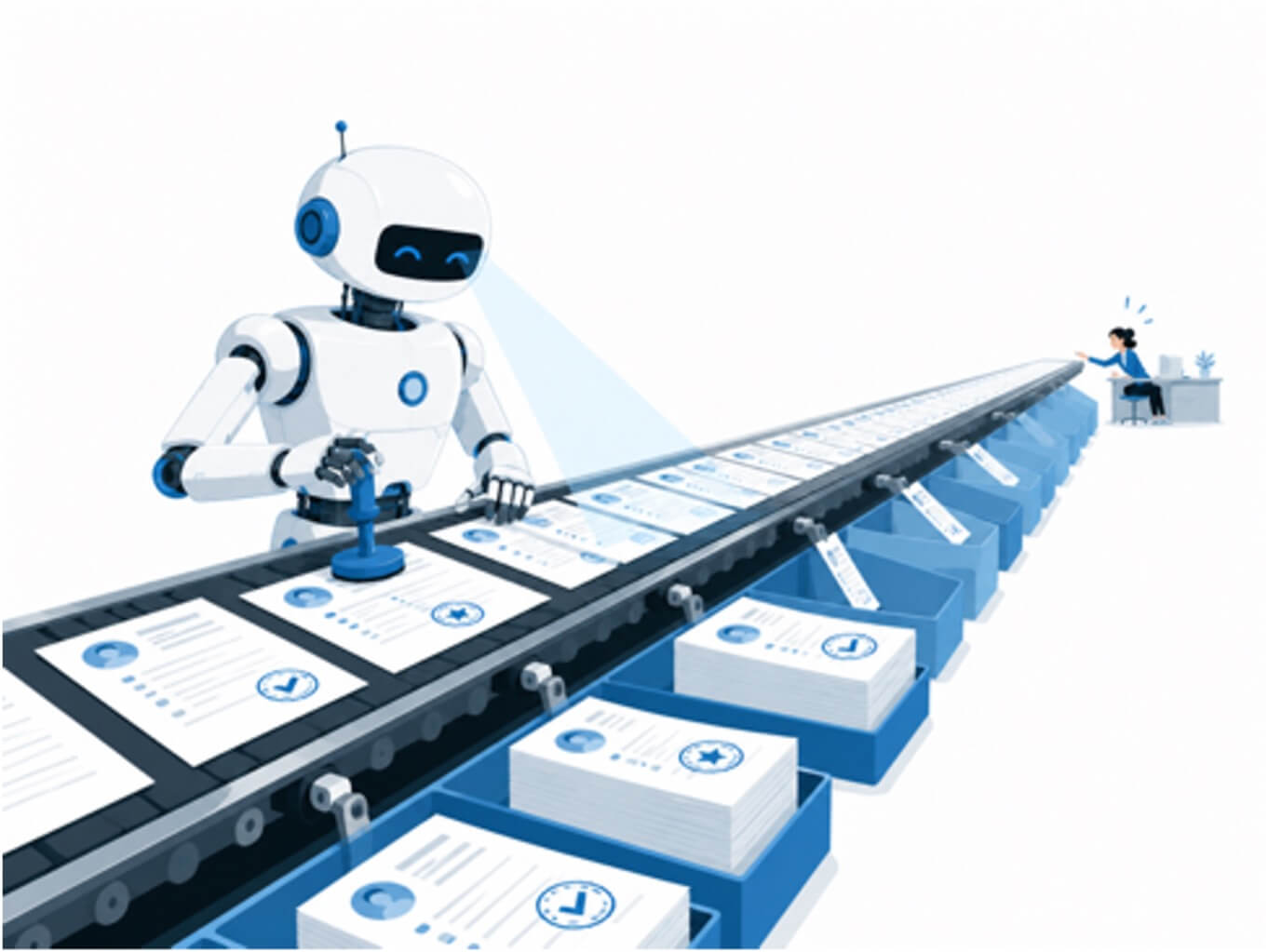
AI now reads, ranks, and shortlists applicants before a hiring manager sees a single name. LinkedIn’s Hiring Assistant can work through thousands of applications and look beyond exact keywords. It may recognize, for example, that someone with strong Power BI experience could learn Tableau quickly.
That part is useful. It can surface qualified people who would have been missed by an old keyword filter.
Candidates know a machine may control the first cut, though, so they write for the machine. They paste the job description into an AI tool and ask it to reshape the resume or profile around the role. By the time the application reaches a recruiter, the employer’s AI may be evaluating language produced by the candidate’s AI.
That does not tell you much about the person. It mostly tells you that both systems recognized the same phrases.
What We Are Seeing from the Middle

We hear versions of this from both sides:
- A client realizes the impressive person they interviewed does not match the person who showed up for work.
- A job seeker spends weeks pursuing a role that was already frozen or filled.
- An experienced engineer uses a translator throughout an interview because he is convinced his accent will be judged before his skills.
Those situations are not identical, but they come from the same place. People no longer trust the process to judge them fairly, so they look for ways to protect themselves.
There is research showing that people change how they present themselves when they believe an algorithm is evaluating them. They become more analytical and less personal because they assume that is what the machine wants. In other words, even honest candidates can sound less like themselves when AI enters the room.
That is the part hiring teams cannot solve with another detection tool. A detector may catch a strange video feed or an answer delivered a little too perfectly. It does not rebuild trust.
A fair process does. When the job is real, expectations are clear, and candidates get a chance to speak with an actual person, most people do not feel the same need to game every step.
The Good News (Yes, There Is Some)
AI will stay in the process, and some of its uses are genuinely helpful. Skills-based matching can uncover strong candidates. Resume tools can help someone explain their experience more clearly. Translation can open a door that bias might otherwise close.
The goal is to use those tools without letting them replace the evidence that matters: how someone thinks, what they have done, and whether the job on the other side is real.
For hiring teams:
- Keep postings current. Take down jobs that have been filled or paused. Candidates remember which companies wasted their time.
- Ask for thinking, not a performance. Use a practical problem, ask follow-up questions, and let the conversation move away from a rehearsed script. Judgment is much harder to outsource than a polished answer.
- Keep a live human step. A video or in-person conversation should still be part of the process. Gartner found that 62% of candidates are more likely to apply when a role requires an in-person interview. People still want to know who they would be working with.
For candidates:
- Use AI as a coach. Research the company, practice questions, organize examples, and tighten your resume. Those are all reasonable uses.
- Keep the story true. Tailor your language to the role, but do not add experience you do not have or let a tool answer for you.
- Practice without the screen. At some point, close the prompt window and explain the work in your own words. That is the version an employer will eventually need to see.