
There’s a lot we can do faster than we could even a few years ago.
A developer can get a head start on code with AI. A hiring manager can sort through information on candidates faster. Meeting notes practically write themselves. Data that used to take hours to dig through can be summarized in seconds.
For the most part, that’s a good thing. Few people want to go back to spending half a day on something a tool can now handle in 20 minutes. And when technology takes repetitive work off our plates, it gives us more time for the work that needs us.
That might be the biggest opportunity in front of us.
As we keep finding ways to make work faster, we also get to decide where we want to spend the time we’re getting back. Because some of the best decisions we see in IT, engineering and hiring still come from the parts that aren’t so easy to automate.
Think about a project that looks good on paper. The timeline works. The technology makes sense. Everyone in the room is on board.
Then someone asks, “What happens if…?”
It might be the engineer who has dealt with a similar system before. Or the developer who sees a possibility nobody else has considered yet. Maybe it’s a project manager who knows the schedule is technically possible but also knows the team well enough to see a better way forward.
That person just added friction to the process. They may have also saved the project a lot of time and money.
We tend to talk about friction as if it’s automatically a problem. Extra approvals, duplicate work, and unnecessary meetings certainly are. But questioning an assumption is also friction. So is having a real conversation instead of relying on a summary. So is taking another look at the candidate who doesn’t quite match the job description.
Technology can help us remove a lot of the friction we don’t need. That makes it even more important to recognize the kind that helps us get a better answer.
There was a time when having access to better technology gave a company an obvious advantage. Today, a lot of people have access to the same or similar tools.
Your developers are using AI. Other developers are, too. Your candidates can use it to improve their resumes and prepare for interviews. Your competitors’ candidates can do the same thing.
We’re already seeing what happens when that plays out in hiring. Candidates are using AI to tailor resumes and prepare answers, while employers are using it to screen and rank candidates. In some cases, one AI system can end up evaluating work produced with the help of another. We took a deeper look at that shift in The Uninvited Third Chair: How AI Is Gaming Both Sides of Hiring.
The same thing is happening with technical work. Being able to produce something quickly is valuable, but producing something is only part of the job.
You still must know what to do with it.
And that’s not necessarily a bad thing. If technology can handle more of the routine execution, people have more room to focus on the decisions, ideas and problems where their experience can make a difference.
Ask any AI tool a technical question and you can have an answer before you finish explaining the problem to someone sitting next to you.
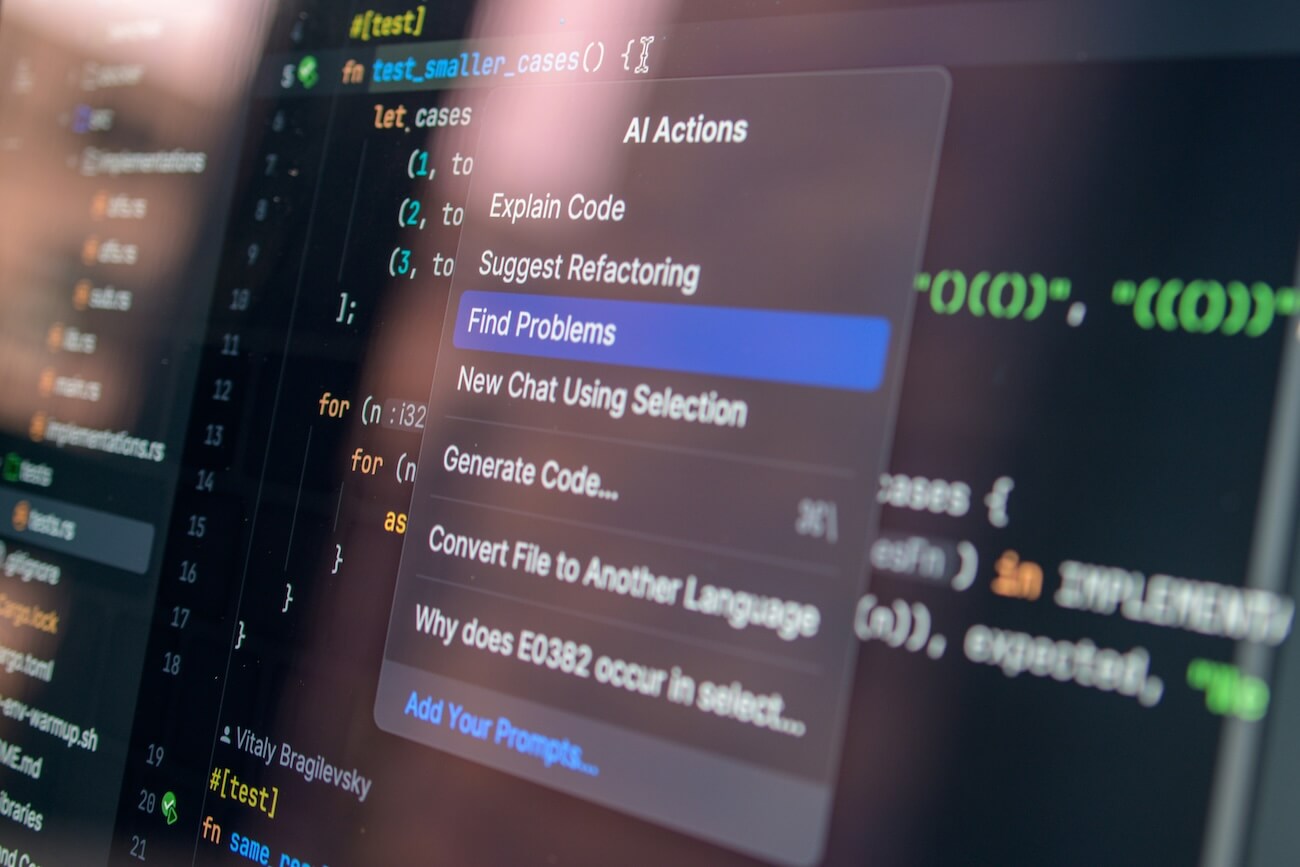
That’s incredibly useful. It gives people a starting point they didn’t have before. A developer can explore an approach faster. A data professional can get through an initial analysis and spend more time interpreting it. A project manager can build the bones of a plan and put more energy into pressure-testing it with the team.
The important part is remembering that a fast answer can be the beginning of the work, not the end of it.
Code can work and still have a cleaner solution. A dashboard can be accurate while leaving another question worth exploring. A project plan can look perfectly reasonable until someone with experience spots an assumption that needs to change. A candidate who doesn’t look ideal on paper might turn out to be exactly the person you need once you get past the resume.
That’s where the combination gets interesting. Technology can get us somewhere faster. People can decide whether it’s where we want to go.
This is the part we find especially interesting.
Technical expertise has always involved knowing things and knowing how to do things. That isn’t disappearing. But there may be another part of expertise that becomes much easier to see now: knowing what good looks like.
An experienced developer can look at working code and know there’s a cleaner way to build it. An engineer can recognize an edge case because they’ve seen one before. A data professional can look at a perfectly accurate report and ask a question that changes how everyone interprets it.
You see it in hiring, too. An experienced recruiter doesn’t just match keywords. They notice when someone understands a problem beyond the rehearsed answer. They ask another question. They pick up on experience that doesn’t fit neatly into a resume bullet.
AI can make all those people faster. What makes the combination powerful is that they bring something else to the tool: context.
A lot of judgment comes from experience. It comes from projects that didn’t go according to plan, hires who surprised you in either direction, systems that behaved differently in production than they did in testing and conversations where somebody asked the question everyone else missed.
A tool doesn’t make that experience obsolete. It gives experienced people another way to put it to work.
Nobody needs another meeting. And there’s no reason to manually spend hours on work that technology can do just as well,
or better, in minutes. We should automate repetitive work. We should use AI to get through first drafts and routine analysis faster. We should absolutely make good people more productive.
But as these tools get better, “Can we automate this?” becomes an easier question to answer. Often, the answer will be yes.
The more interesting question is where we want people involved.
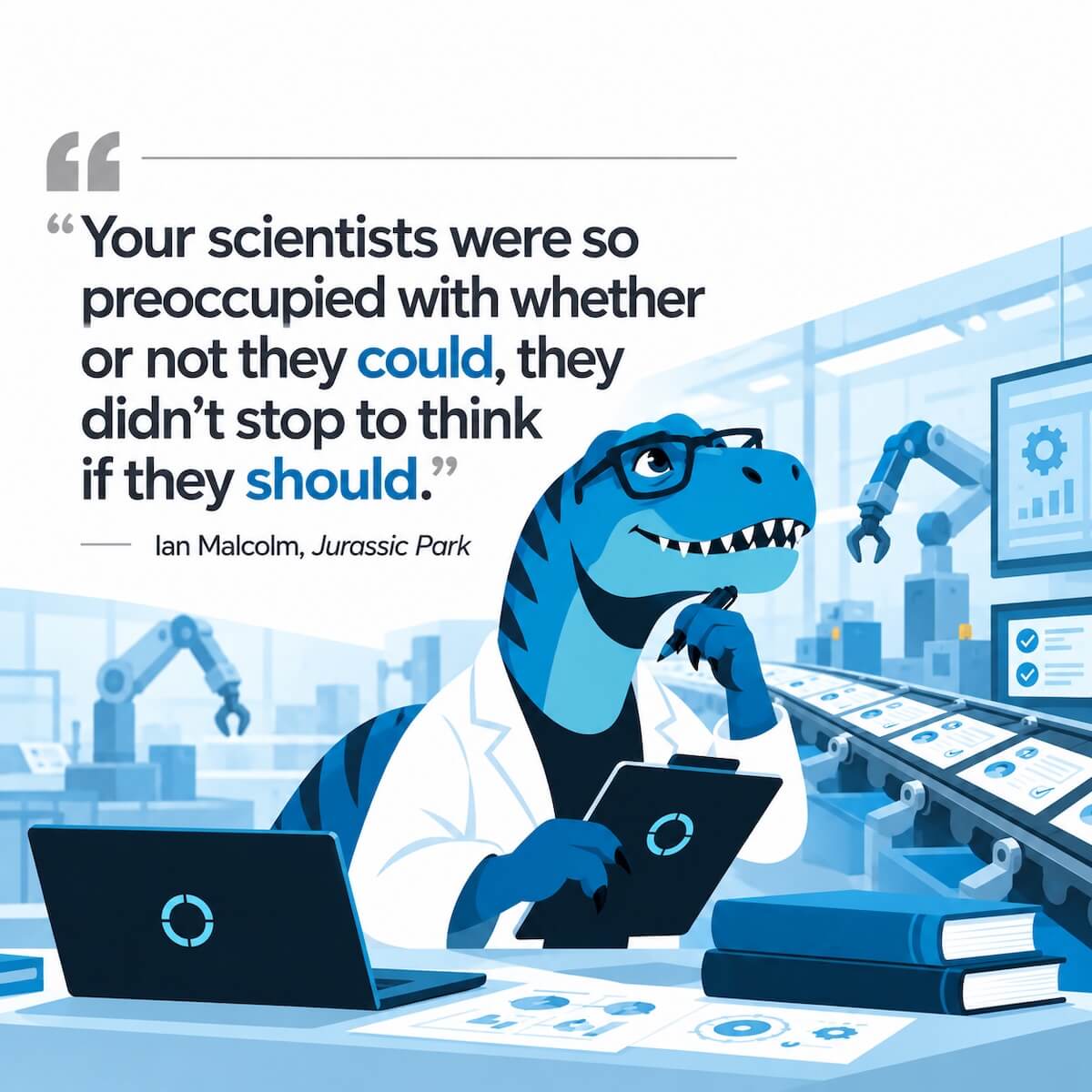
There’s a line from Jurassic Park that, strangely enough, feels relevant here:
“Your scientists were so preoccupied with whether or not they could, they didn’t stop to think if they should.” -Ian Malcolm, Jurassic Park
We’re obviously not talking about resurrecting dinosaurs. But there’s something useful in the question.
Just because we can automate a step, remove a human interaction or make a process faster doesn’t necessarily mean we should. And just because a process still needs a person doesn’t mean technology can’t make that person much better at it.
That’s where the opportunity is.
Let technology handle more of the work it’s good at. Give people better tools to do the work they’re good at. And spend a little more time figuring out where the two are better together.
We’ve spent a lot of time asking how technology can save us time.
Maybe the more exciting question is what becomes possible with the time it gives back.